



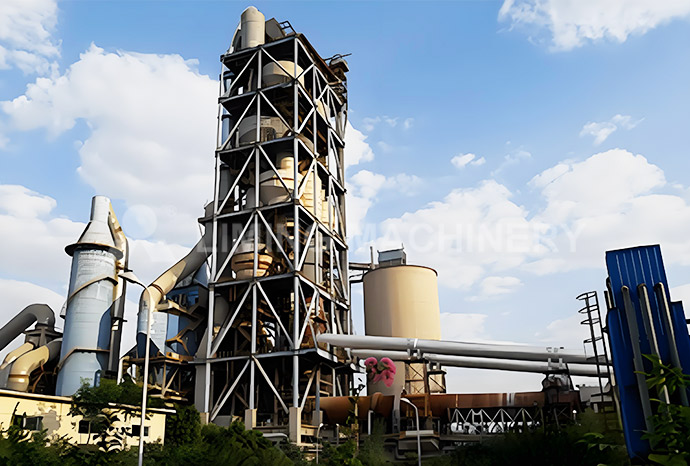
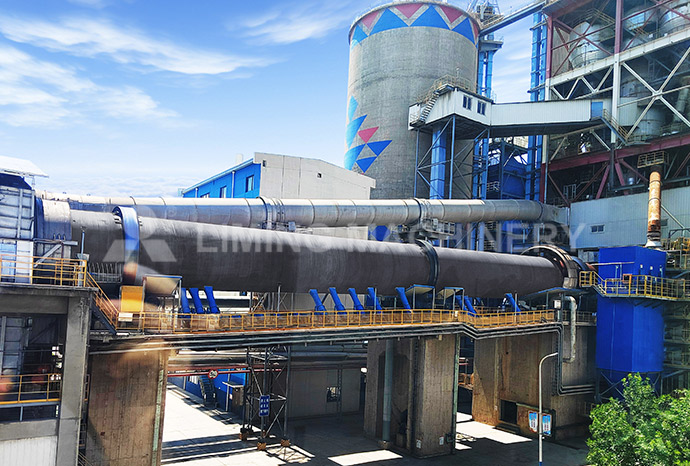
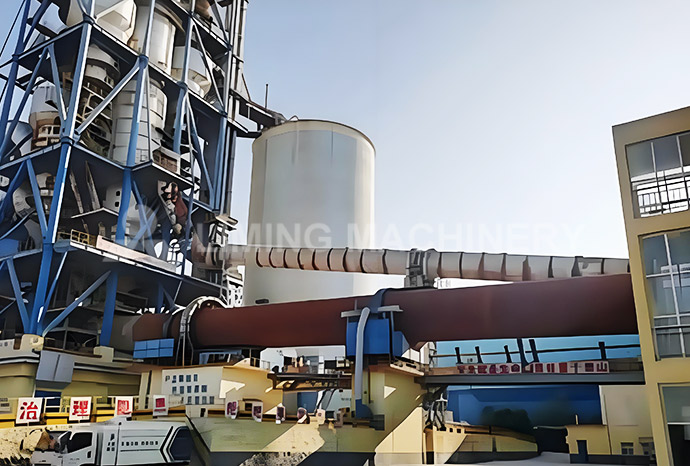
Rotary Kiln
Product Introduction: Cement rotary kiln is a type of rotary kiln commonly used for the production and calcination of cement clinker. Currently, the cement rotary kiln produced by our company is mainly a dry process production line equipment for cement clinker. According to different cement clinker production processes, this product is divided into hollow dry process kiln, kiln with preheater, and external decomposition kiln. There are sixteen models with cylinder diameters between 2.5m and 4.3 meters, which can meet the daily production range of 180-3200 tons of dry process clinker calcination.
Applications:
Suitable for cement plants and clinker production lines.
Capacity: 200-2500(t/d)
Performance Advantages
It can evenly heat the material during calcination, ensuring stable product quality
The main transmission system utilizes advanced AC variable frequency speed control technology, offering energy efficiency, environmental friendliness, wide speed regulation range, high efficiency, precise speed control, and stable operation.
The base welding of both the single supporting roller device and the thrust roller device has been completed. After vibration stress relief treatment to eliminate welding stresses, the installation accuracy and reliability of the entire machine can be improved.
The kiln head and tail sections have undergone comprehensive structural redesign, effectively resolving common issues of return material at the kiln end and dust leakage, thereby ensuring smoother and more natural material conveying.
Working Principle
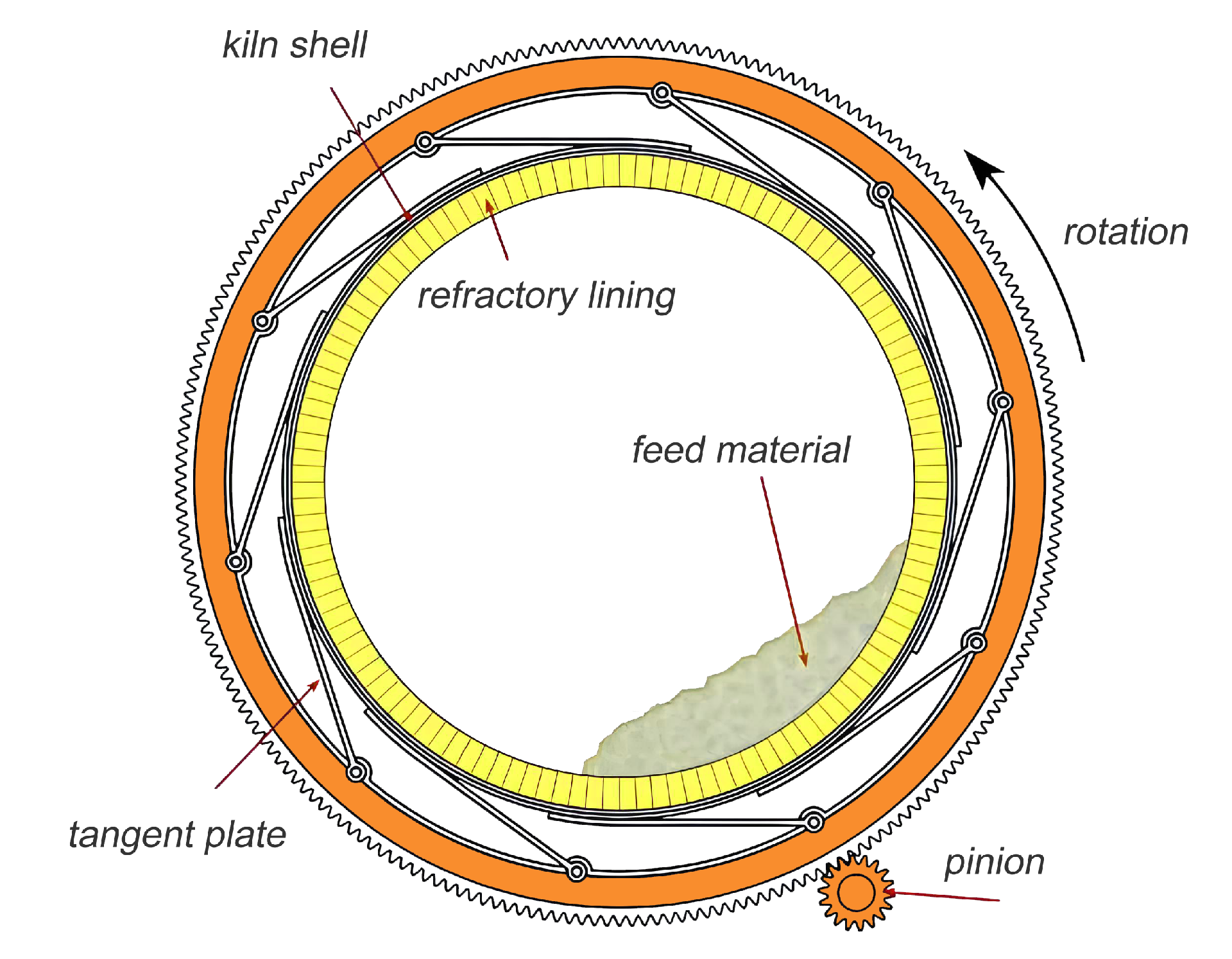
Material is fed into the kiln from the kiln tail (higher end). Due to the inclination and slow rotation of the cylinder, the material moves forward gradually while rolling axially and radially. Fuel is injected into the kiln through the burner at the kiln head (lower end) for combustion. Heat is transferred to the material through radiation and conduction. During its movement, the material forms a liquid phase, generating minerals such as tricalcium silicate, dicalcium silicate, tricalcium aluminate, and tetracalcium aluminoferrite. After completing the sintering process, clinker is formed and discharged from the kiln head.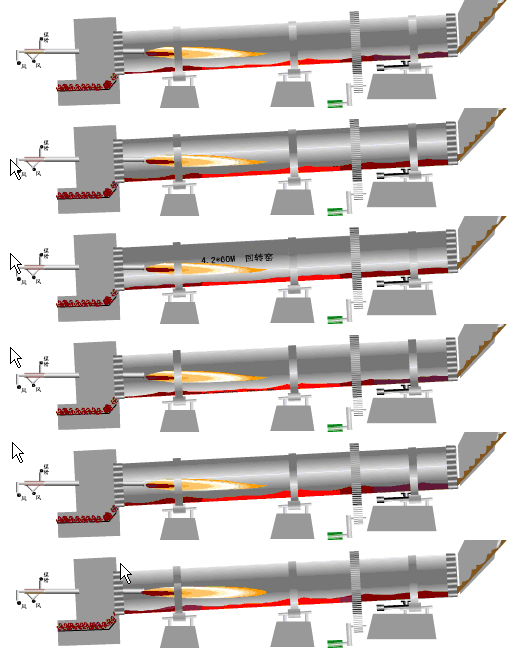
Specifications
Hot Sale: patented technology, high productivity, environmental protection and energy saving
FAQ
What does heat‑rate index mean for lime rotary kiln and its influencing factors?
Heat rate (kJ/kg‑CaO) means heat consumption for producing each kilogram of CaO. Our kiln series reaches 4810‑5300 kJ/kg‑CaO. High raw‑material impurity, poor preheater performance, serious air‑leakage and insufficient cooler heat‑recovery will increase heat consumption. Large‑capacity models with polygonal preheater deliver lower heat rate. Good sealing and regular maintenance for preheater & cooler help control heat‑rate and cut fuel operating cost.
How to select among lime rotary kiln, lime shaft kiln and twin‑shaft kiln?
Lime rotary kiln: 200‑1000 t/d for medium‑large‑scale projects with stable lime activity and waste‑heat recovery by vertical preheater. Lime shaft kiln:100‑800 t/d with lower investment for small‑medium output. Twin‑shaft kiln:150‑800 t/d with low heat consumption by regenerative process. Rotary kiln accepts wider raw‑material particle range. Select kiln model by daily capacity, budget, raw‑material, fuel condition and target lime activity.
What are the core systems of lime rotary kiln?
Lime rotary kiln complete set includes kiln shell, supporting‑retaining wheel device, AC frequency‑conversion main drive, kiln head & kiln‑tail seal, vertical preheater, vertical cooler, burner combustion system and flue‑gas dust‑removal system. Support base eliminates welding stress via vibration aging before integrated machining for high installation accuracy. Inclined rotating shell conveys and calcines materials for active lime and calcined dolomite in lime production lines.
What information shall I provide for accurate lime rotary kiln production‑line quotation?
Please provide target daily capacity, limestone lab report (CaO, MgO, SiO₂, sulfur impurity), lump‑size range of feed limestone, available fuel type & calorific value, plant site dimension & elevation, local power‑supply parameter, target lime activity index, and scope of supply including preheater, cooler and dust collector. Also clarify demands for general‑layout drawing and on‑site commissioning. Complete data supports correct kiln sizing and full process proposal.
What advantages does AC variable‑frequency main drive have over traditional speed regulation?
New AC frequency‑conversion main drive saves more energy than old electromagnetic or DC speed‑regulation solutions. It features wide speed‑adjusting range, high regulating precision and stable running. Kiln shell rotating speed can be flexibly adjusted to change material residence time, control under‑burning and over‑burning conditions. Frequency‑conversion drive reduces startup impact on riding rings and girth gear, lowers abrasion and maintenance work as standard upgrade for modern lime kilns.
What function does vertical preheater play in rotary lime kiln system?
Vertical preheater is installed at kiln tail to recover waste heat from hot kiln flue gas. It heats normal‑temperature limestone close to decomposition point. Partial carbonate decomposes in advance to reduce calcination load, cut fuel consumption and improve lime activity. Circular and polygonal types are available for different capacity grades. Preheater specification must match kiln capacity, flue‑gas temperature and flow to keep stable thermal condition for energy‑saving lime lines.

 WhatsApp
 Leave message