



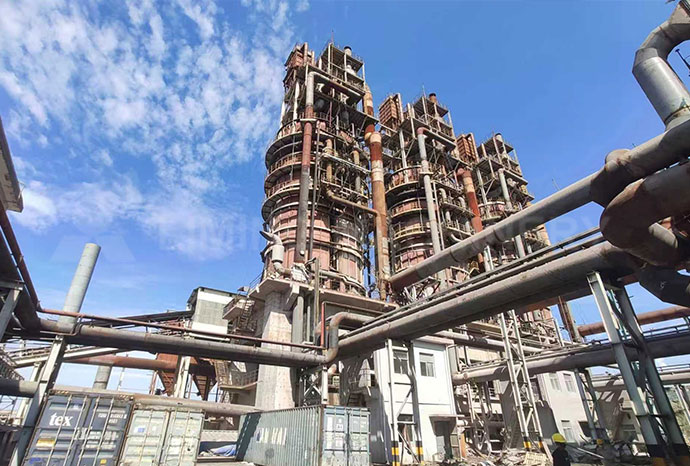
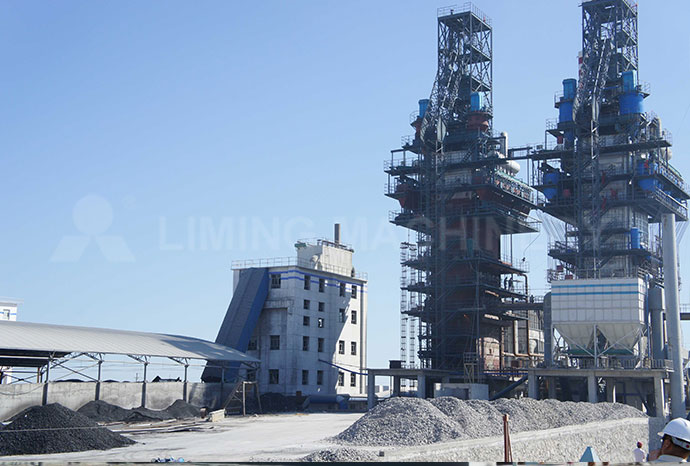

Twin-shaft kiln
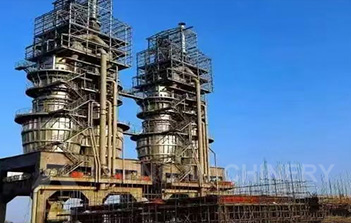
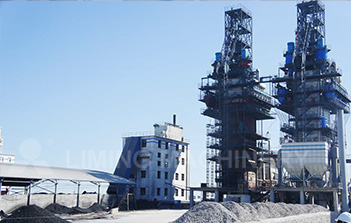
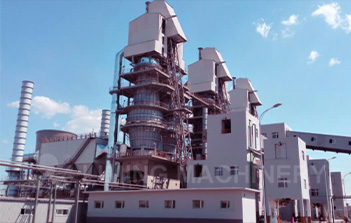
The twin-shaft kiln represents the most advanced lime kiln technology currently available. It operates by alternating the calcination process between two interconnected shafts, producing lime with high reactivity and superior quality that meets the requirements of most market users. Additionally, its capability to utilize multiple fuel types makes it widely suitable for large-scale lime production enterprises.
Applications:
Medium to large-scale lime plants with stringent quality requirements.
Product Details
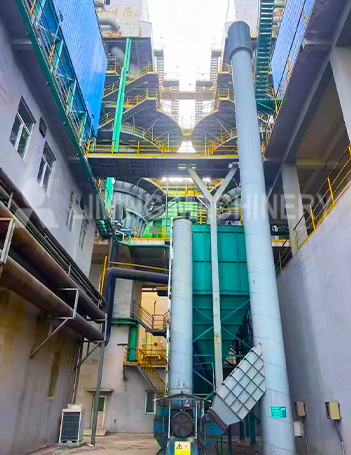

Performance Advantages
Based on the design of "alternating calcination + waste heat recovery," the thermal efficiency reaches 75%-85%, far exceeding that of single-heat vertical kilns (50%-60%); fuel consumption per unit product is low. Taking lime calcination as an example, the fuel consumption per ton of active lime is only 80-120m³ (natural gas) or 120-150kg (pulverized coal), which is 20%-30% lower than that of single-heat vertical kilns.
Employs a two-stage purification system of 'cyclone dust collector + bag filter,' achieving dust emission concentration ≤10mg/m³, far below the national emission standard (30mg/m³); the low-temperature combustion air and short flame design during combustion ensure NOx emission concentration ≤300mg/m³, meeting standards without the need for additional denitrification equipment.
Can process various raw materials (limestone, dolomite, magnesite, etc.), with a wide range of raw material particle sizes (20-80mm), and strong tolerance to fluctuations in raw material composition (CaCO₃ content fluctuations of ±5% do not affect finished product quality). Alternating calcination mode ensures a uniform temperature field within the kiln (temperature difference ≤50℃), resulting in high finished product activity (lime activity ≥300ml/4N-HCl), low under-burning/over-burning rate (≤5%), and superior quality stability compared to rotary kilns (under-burning/over-burning rate ≤8%).
30%-50% of the floor space of a rotary kiln of the same capacity (e.g., a 300-ton-per-day lime production line requires approximately 800㎡), reducing civil engineering investment by 20%-30%.
The equipment has a simple structure (no complex transmission components), resulting in a purchase cost 40%-50% lower than a rotary kiln, and a short installation period (3-4 months), making it suitable for rapid production deployment by small and medium-sized enterprises.
Alternating operation mode eliminates continuous high-temperature zones, extending the kiln lining (refractory bricks) service life to 3-5 years, far exceeding that of rotary kilns (1-2 years); core components (reversing valves, burners) have a low failure rate, with annual operating time exceeding 8000 hours.
Working Principle
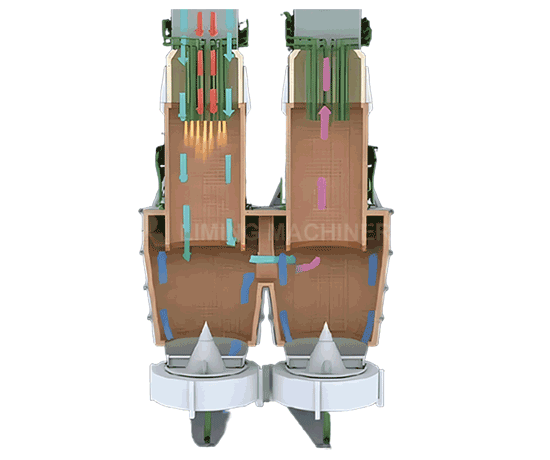
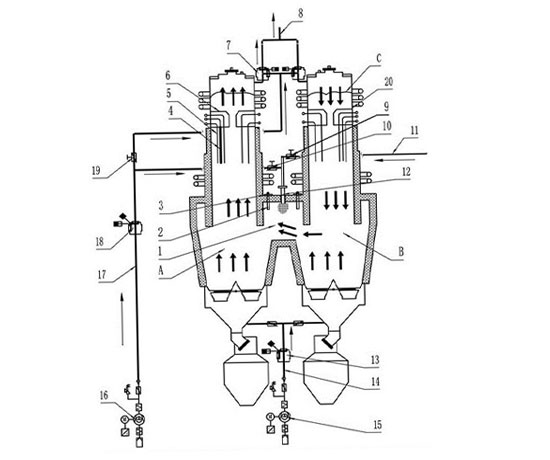
The twin-shaft kiln calcines limestone using two chambers. Shaft A and Shaft B are connected at the bottom of the calcination zone, and the material moves downward through both shafts. During calcination in Shaft A, combustion air and fuel flow parallel to the material in Shaft A, allowing the hot flame to come into contact with the cooler, highly endothermic material. Conversely, the relatively lower-temperature combustion gases interact with the progressively calcined material, achieving uniform calcination conditions and high thermal efficiency. The combustion products and CO₂ released from the material decomposition pass through the connecting channel into Shaft B. At this stage, Shaft B acts as a regenerative chamber, where the limestone inside absorbs heat from the exhaust gases, while the exhaust gases are cooled to a relatively low temperature. The material stores heat, which is then used to preheat the combustion air for the next cycle. In this configuration, Shaft A serves as the combustion shaft, reflecting the parallel flow characteristic, while Shaft B functions as the regenerative shaft with heat storage properties. In the next cycle, the roles alternate: Shaft A becomes the regenerative chamber, and Shaft B becomes the combustion shaft. This enables continuous limestone calcination.
FAQ
Is twin‑shaft kiln suitable for old‑plant renovation; what site‑conditions need verification for retrofitting?
Thanks to small footprint, twin‑shaft kiln fits old‑plant renovation replacing old single‑shaft kiln or small rotary kiln. Pre‑retrofit checking list: available site length‑width and clearance height; foundation bearing‑capacity and anchor‑bolt layout (judge re‑pouring necessity); transformer capacity covering total power of kiln‑host, hydraulic station, dedusting and fans; whether existing flue‑gas pipeline matches twin‑shaft‑kiln exhaust condition; fuel‑pipeline supply capacity; elevation of upstream‑downstream conveyors to ensure smooth material transfer without blockage.
What are main wearing‑parts for twin‑shaft kiln and key notes for spare‑part procurement?
Key wearing‑parts: kiln refractory bricks & castables; reversing‑valve plate and sealing assemblies; burner guns & protection sleeves; discharging air‑lock seals; dust‑collector pulse valves & filter bags; hydraulic‑system oil‑seals. Reversing‑valve seals and burners suffer fast erosion under high‑temperature flue‑gas. Refractory service‑life is affected by cyclic thermal shock from shaft‑reversing. Stock standard‑spares on‑site; reserve manufacturing lead‑time for custom non‑standard items. Original spare‑parts guarantee dimensional compatibility and mitigate loss caused by unplanned shutdown.
How to make project selection between twin‑shaft kiln and ordinary single‑shaft vertical kiln?
Twin‑shaft kiln fits medium‑large‑scale projects pursuing high‑lime‑reactivity, low under‑over‑burnt ratio, energy‑saving and strict‑environmental‑performance with high automation level, yet its total cost (including control system) is higher than single‑shaft kiln. Conventional single‑shaft vertical kiln features lower investment and simpler operation for projects with moderate lime‑quality requirement. Evaluate product‑quality requirement, project budget, fuel‑cost, emission‑standard and operator skill‑level. Prioritize twin‑shaft kiln for steel‑making or calcium‑carbide projects with strict high‑activity‑lime specification.
What causes large pressure difference & pressure unbalance between two shafts of twin‑shaft kiln and solutions?
Abnormal pressure‑gap between Shaft‑A and Shaft‑B: reversing‑valve plate out‑of‑position or damaged seal bringing unequal gas‑path resistance; kiln‑ring formation or material bridging inside one‑shaft raising bed resistance; severe feed‑size segregation creating different void ratio in two shafts; partial blockage on dedusting inlet pipeline. Inspect reversing‑valve hydraulic movement and seals; check material level for bridging or kiln‑ring; homogenize feed‑size; clear pipeline blockage to restore pressure balance and guarantee normal alternating calcination‑regeneration workflow.
What main process reasons for over‑burnt lime in twin‑shaft kiln?
Over‑burning results from excessive residence‑time under high‑temperature zone. Main triggers: excessive fuel input causing combustion‑shaft over‑temperature; over‑long reversing‑cycle prolonging high‑temperature residence; too‑slow discharging‑speed of both shafts; too‑fine feed lumps getting heated too fast; reversing‑valve fault causing flame‑gas offset and local over‑heat. Counter‑measures: cut fuel feed; moderately shorten reversing‑cycle; raise discharging‑rate properly; sieve out ultra‑fine particles; repair reversing‑valve for balanced gas‑distribution to keep over‑burnt ratio ≤5%.
What are the core units of twin‑shaft kiln system?
Twin‑shaft kiln consists of two interconnected vertical shafts (A & B), reversing‑valve assembly, burner gun groups, automatic feeding & discharging device, hydraulic switching unit, two‑stage dedusting (cyclone + bag filter) and DCS automatic control system. Connecting channel is arranged at bottom of calcination zone. Reversing valves periodically switch combustion‑shaft and regenerative‑shaft. Without heavy rotary‑kiln transmission components, it features high automation for medium‑large lime projects for calcining limestone, dolomite and magnesite.

 WhatsApp
 Leave message