



Shaft Kiln
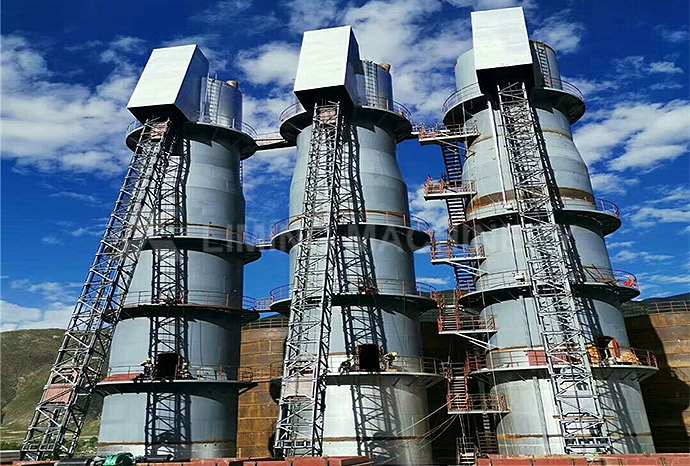
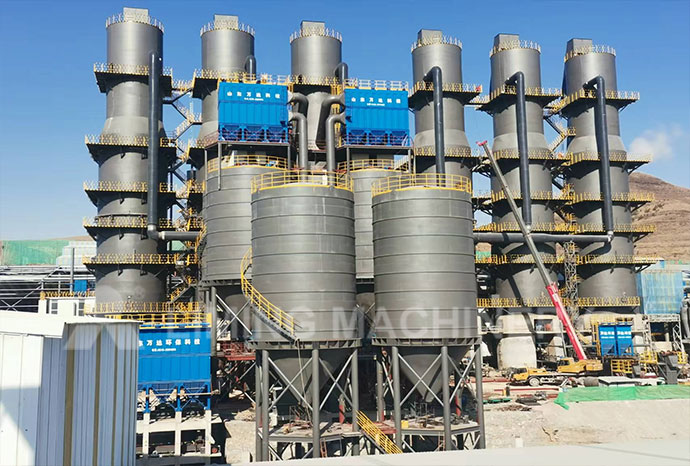
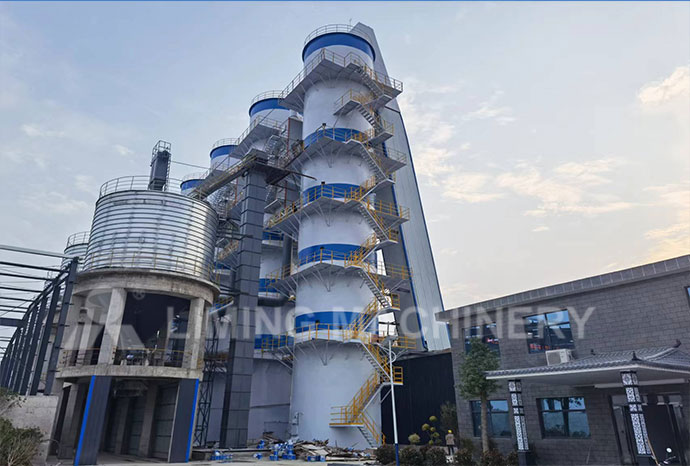
Shaft kiln refers to vertical shaft kiln for lime. Liming Machinery's vertical lime kiln is a modern facility that integrates environmental protection and energy-saving functions with a high degree of mechanization and automation. By adopting advanced technologies, it efficiently utilizes low-cost energy sources, particularly converting environmentally polluting gases (such as converter gas, blast furnace gas, and calcium carbide furnace exhaust) into primary energy, thereby transforming waste into valuable resources.
Calcination Temperature: 1100±50℃
Applications:
Suitable for metallurgy, building materials, calcium carbide, nano-calcium carbonate, aerated concrete, sugar refining, and other industrial sectors.
Capacity: 50-400(t/d)
Input size: 30-80 mm / 80-120 mm
Product Details
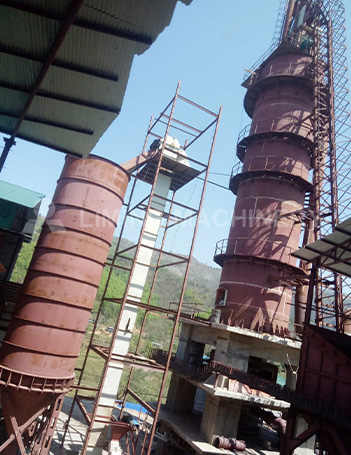
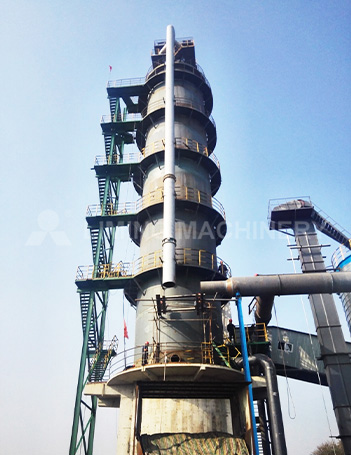
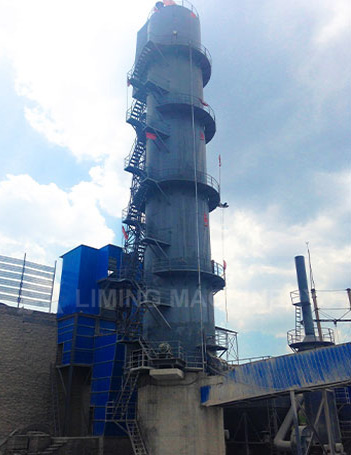
Performance Advantages
Cooling air injected from the kiln bottom preheats through product cooling, then rises to support combustion in the calcination zone, cutting fuel consumption via self-sustaining heat recycling.
Material descends by gravity with minimal surface abrasion, reducing wear rate. Service life reaches 6-10 years under normal operation.
The kiln supports mixed-firing (lump coal/coke), gas-firing (high-value fuels like natural gas or low-value gases including converter/blast furnace gas), and oil-firing (heavy oil/diesel), ensuring adaptability to diverse energy sources.
Vertical shaft configuration, steeply-angled skip hoist feeding, and tightly-arranged functional zones collectively minimize ground space requirements.
Reduced steel processing components lower machining costs, while simplified installation and refractory lining minimize construction expenses.
Working Principle
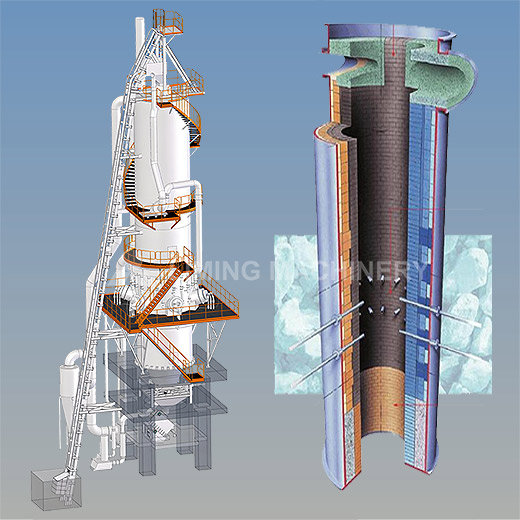
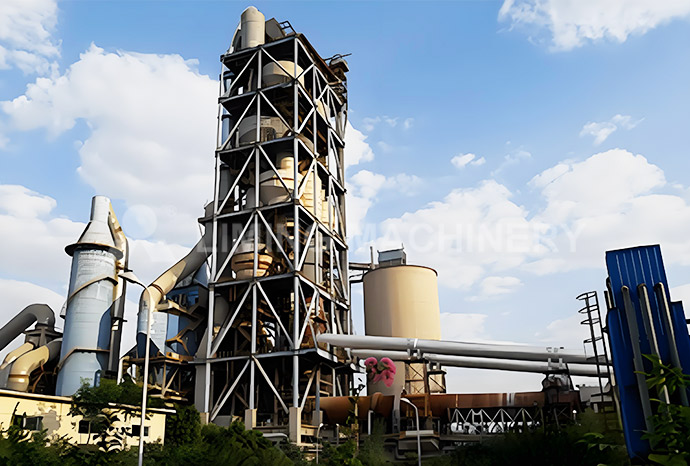
The Shaft kiln has a cylindrical structure where materials are fed from the top and discharged from the bottom. The interior of the kiln is divided from top to bottom into three zones: the preheating zone, the calcination zone, and the cooling zone. In the preheating zone, flue gas is used to preheat the materials; in the calcination zone, fuel combustion provides the heat required to complete the calcination process; in the cooling zone, the materials exchange heat with blown-in cold air for cooling, and the heated air then enters the calcination zone to support combustion.
The movement of materials inside the kiln is driven by calcination-induced shrinkage and discharge from the bottom. After calcination is completed, the materials are cooled to approximately 60°C above ambient temperature, unloaded outside the kiln through ash dischargers and sealing valves, and then elevated, screened, and stored in different silos according to particle size.
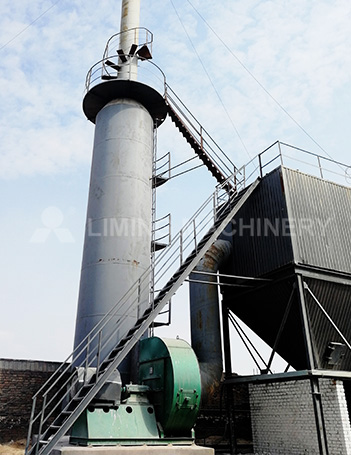
Combustion air is blown into the bottom of the kiln by Roots blowers, while an induced draft fan creates a slight negative pressure (approximately -10 Pa) at the top of the kiln, ensuring smooth airflow and stable calcination. The flue gas is treated through dust removal and purification before being discharged up to standard through the chimney.
Specifications
Hot Sale: patented technology, high productivity, environmental protection and energy saving
FAQ
What fuels are available for lime shaft kiln, can industrial waste gas be utilized?
Shaft kiln has wide fuel adaptability: lump coal, coke, petroleum coke and lump biomass for mixed firing; high‑value gas like natural gas; low‑value industrial waste gas such as converter gas, blast‑furnace gas and calcium‑carbide‑furnace exhaust for waste‑to‑energy purpose; heavy oil and diesel for oil‑firing mode. Adjust air‑distribution & charging parameters for different fuels. When using industrial waste gas, verify gas calorific‑value, pressure and impurity, configure pressure‑regulating and pre‑treatment facilities for stable calcination.
Where does the low‑investment advantage of lime shaft kiln reflect?
Low‑investment advantage covers both equipment‑manufacturing and construction phases: less steel‑structure & machining work; vertical cylinder removes heavy components such as supporting rollers and girth gear; simple refractory masonry; moderately‑sized auxiliary equipment. Civil foundation does not require heavy structure for transverse load. It suits 50‑400 t/d medium‑small projects with limited budget. Besides equipment price, calculate total construction cost including civil work, fuel pre‑treatment and dust‑removal system during comparison.
What does limestone‑to‑lime ratio 1.6‑1.7:1 of shaft kiln stand for?
Limestone‑to‑lime ratio 1.6‑1.7:1 means 1.6‑1.7 tons limestone feed for producing one ton quicklime. The ratio is directly decided by effective CaO and impurity content inside limestone. Lower limestone purity brings higher ore consumption per ton lime. Higher under‑over‑burnt ratio also increases ore waste. Calculate theoretical ore consumption with limestone lab report in project phase. Sieve feedstock well, control lump‑size and reduce fine‑powder feeding to keep ore‑consumption within designed ratio.
What factors affect lime reactivity 220‑280 ml of shaft‑kiln product?
Lime reactivity 220‑280 ml is primarily determined by limestone mineral composition, also affected by calcination temperature, residence time inside calcination zone and cooling performance. Raw‑material crystal structure and impurity are fundamental factors. Keep calcining‑zone temperature 1100±50℃ to avoid under‑burning and severe over‑burning, plus sufficient timely cooling for hot lime. With fixed raw‑material quality, stabilize three‑zone height, reasonable discharging rate and uniform charging‑air‑distribution for stable reactivity index.
What is calcination principle of lime shaft kiln and functions of three inner zones?
Vertical cylindrical shaft kiln receives feed from top and discharges lime at bottom. Three zones: preheating zone uses hot flue‑gas to preheat limestone; calcination zone supplies combustion heat for limestone decomposition into quicklime; cooling zone injects cold air to cool hot lime, and heated air flows upward as combustion‑supporting air. Material descends by calcination shrinkage plus bottom discharging. Roots blower supplies combustion air; induced‑draft fan keeps kiln‑top slight negative pressure at ‑10Pa. Flue gas gets purified before chimney discharge.
Which industries apply lime shaft kiln and what are product usages?
Quicklime from shaft kiln serves metallurgy, building‑material, calcium‑carbide, nano‑calcium‑carbonate, aerated‑concrete and sugar‑refining industries. It works for steel‑making desulfurization, calcium‑carbide raw‑material, aerated‑concrete ingredients and sugar‑solution purification. Capacity ranges 50‑400 t/d, feed limestone lump‑size:30‑80mm / 80‑120mm. Clarify target indexes of lime reactivity and under‑over‑burnt ratio according to downstream requirements for proper process design.

 WhatsApp
 Leave message