



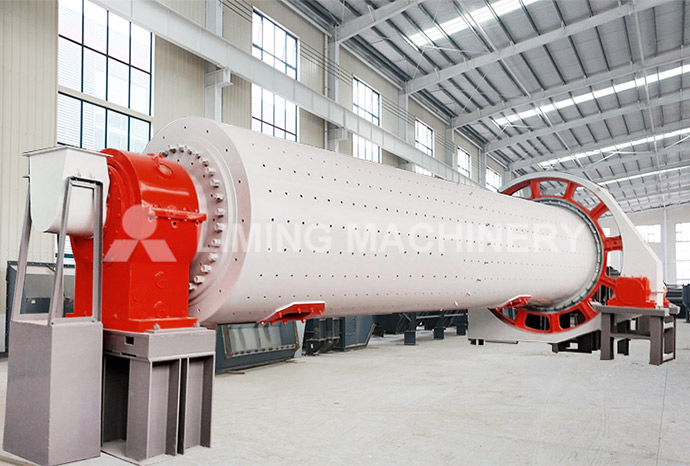
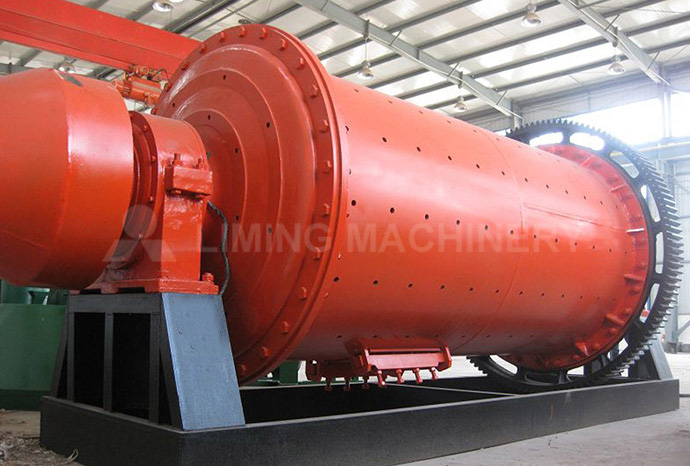
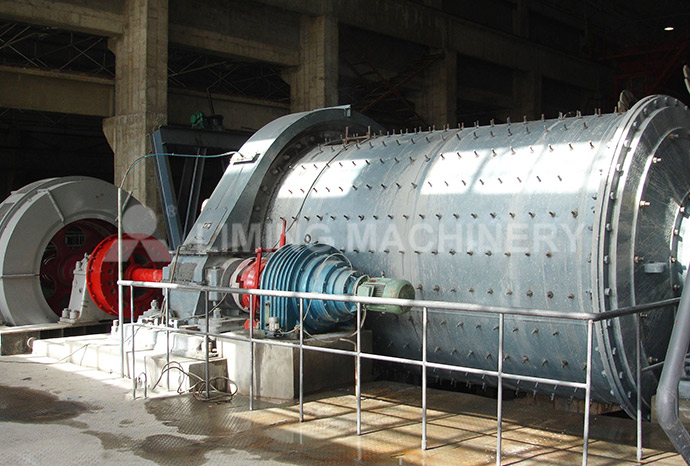
Cement Ball Mill
Cement clinker is more difficult to grind compared to raw materials, and has higher wear consumption on the lining and steel balls of the ball mill. Therefore, high manganese wear-resistant lining plates are needed with higher wear resistance internally. Ball mills are widely used due to their convenient maintenance and low price.
Applications:
Cement, coal, power plant desulfurization, metallurgy, chemical industry, non-metallic mineral, construction material, ceramics.
Capacity: 10-150T/H
Performance Advantages
High grinding efficiency and low maintenance cost.
The product has uniform fineness and smooth.
Low vibration, good equipment sealing, no dust overflow, environment friendly.
Fineness and production capacity can be adjusted within a certain range.
Working Principle
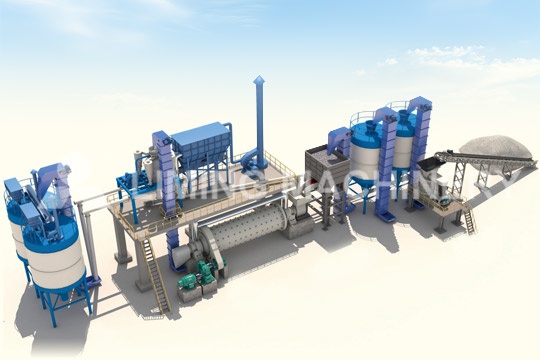
Clinker Ball Mill usually have 2 to 4 chambers, and materials are evenly fed into the first chamber of the ball mill through the feeding screw by the feeding device. The chamber has a stepped lining plate and is filled with grinding media of different specifications. The rotation of the cylinder generates centrifugal force, which brings the grinding media to a certain height and then falls down, causing impact and grinding on the materials. After rough grinding is completed in chamber 1, the material enters the next chamber through the partition plate. This chamber is lined with corrugation or flat lining plates and contains grinding media for further grinding of the material; Powdered materials are discharged through the discharge comb board to complete the grinding process.
Specifications
Hot Sale: patented technology, high productivity, environmental protection and energy saving
FAQ
How is product collection and packaging achieved on the PMD New-Generation Permanent-Magnet Direct-Drive Intelligent European Grinding Mill?
Qualified fine powder enters the cyclone collector for gas-solid separation and is discharged by a rotary valve; ultrafine fractions are captured again by the pulse collector. Product is pneumatically conveyed to silos or ton-bag packers for automated fi
What fuels are available for lime shaft kiln, can industrial waste gas be utilized?
Shaft kiln has wide fuel adaptability: lump coal, coke, petroleum coke and lump biomass for mixed firing; high‑value gas like natural gas; low‑value industrial waste gas such as converter gas, blast‑furnace gas and calcium‑carbide‑furnace exhaust for waste‑to‑energy purpose; heavy oil and diesel for oil‑firing mode. Adjust air‑distribution & charging parameters for different fuels. When using industrial waste gas, verify gas calorific‑value, pressure and impurity, configure pressure‑regulating and pre‑treatment facilities for stable calcination.
How does the LM Vertical Coal Grinding Mill achieve drying and explosion protection?
The LM Vertical Coal Grinding Mill has a hot-air system using a furnace or kiln waste heat to dry coal (feed moisture up to 10%–15%). It is explosion-proof by design: seal-air on rollers and separator, temperature and CO monitoring, controlled oxygen,
What main‑machine combinations are available for NK mobile plant and their corresponding processes?
NK wheel‑mounted plant flexibly equips C6X jaw crusher, HPT cone crusher, impact crusher or sand maker for different process units. Jaw‑crusher unit performs primary crushing for lump ore and construction waste. Cone or impact‑crusher units deliver
Is twin‑shaft kiln suitable for old‑plant renovation; what site‑conditions need verification for retrofitting?
Thanks to small footprint, twin‑shaft kiln fits old‑plant renovation replacing old single‑shaft kiln or small rotary kiln. Pre‑retrofit checking list: available site length‑width and clearance height; foundation bearing‑capacity and anchor‑bolt layout (judge re‑pouring necessity); transformer capacity covering total power of kiln‑host, hydraulic station, dedusting and fans; whether existing flue‑gas pipeline matches twin‑shaft‑kiln exhaust condition; fuel‑pipeline supply capacity; elevation of upstream‑downstream conveyors to ensure smooth material transfer without blockage.
What conditions must be met for highway transportation of NK wheel‑mounted mobile crushing plant?
NK plant belongs to semi‑trailer‑type equipment, transported by trailer as whole or split modules. Check overall dimension and axle load to comply with national over‑limit highway regulations. Some over‑width/over‑height modules require disasse

 WhatsApp
 Leave message