



Philippine Lime Production Project: 300,000 TPY Integrated Rotary Kiln and Limestone Grinding Line
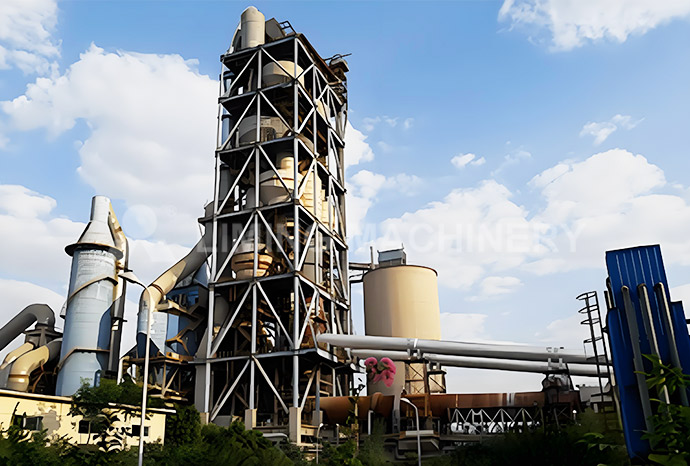
Philippine Lime Production Project Overview
Client: Philippine mineral processing company (active lime and quicklime producer serving the domestic industrial sector)
Location: Philippines (Southeast Asian market)
Project Scope: Complete lime production line integrating limestone powder preparation and rotary kiln calcination
Annual Output: 300,000 metric tons of finished lime products
Equipment Supplied: Liming Heavy Industry LM Series Vertical Roller Mills + Rotary Kiln system
Project Status: Successfully commissioned and operating at design capacity
The Challenge
Philippine lime producers face distinct operational challenges. The tropical climate brings high humidity and frequent monsoon rains, requiring grinding equipment capable of processing limestone with elevated moisture content without compromising throughput. Additionally, the local market demands consistent product quality—limestone powder must achieve 200 mesh fineness for efficient calcination in rotary kilns, while the calcined lime must meet high reactivity standards (CaO >90%, activity >300mL).
Traditional production configurations using separate drying and grinding units consume excessive energy and occupy large plant footprints—a significant disadvantage in the Philippines where land costs and power rates continue to rise.
The Solution: Integrated LM Vertical Mill and Rotary Kiln System
Liming Machinery designed a streamlined production line addressing both the grinding and calcination stages with advanced process integration.
Stage 1: Limestone Grinding with LM Series Vertical Mill
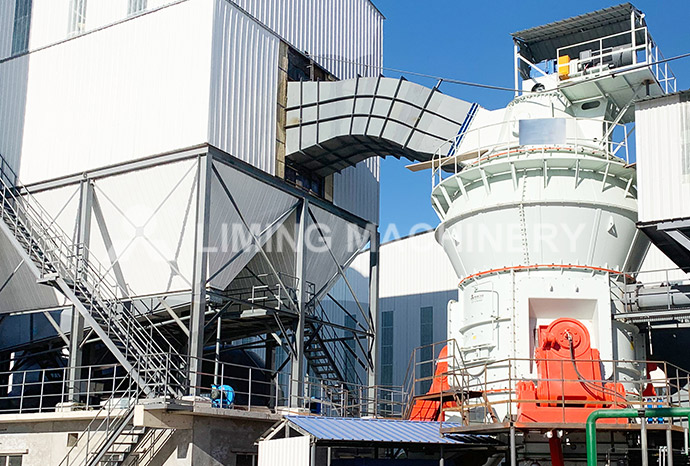
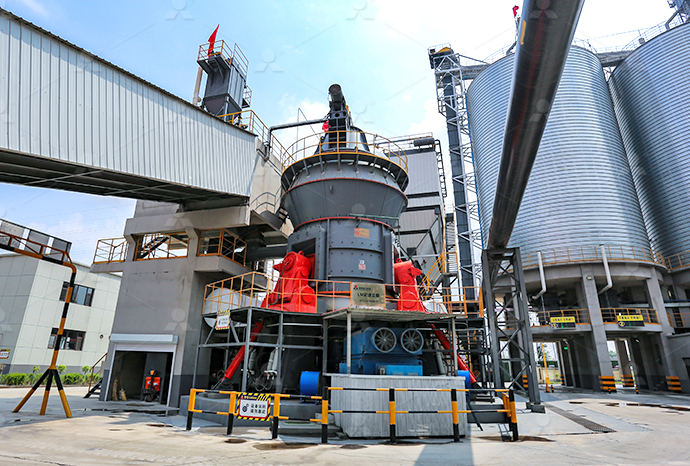
The core grinding equipment selected was the LM Vertical Roller Mill, specifically configured for 200-mesh limestone powder production at 300,000 tons per year. The LM mill integrates four functions—crushing, grinding, drying, and powder classification—into a single unit. This design proved particularly advantageous for Philippine conditions:
In-built drying capability: The LM mill uses hot air from the kiln exhaust (420-980°C) to dry limestone with up to 10-12% moisture content without requiring an external dryer
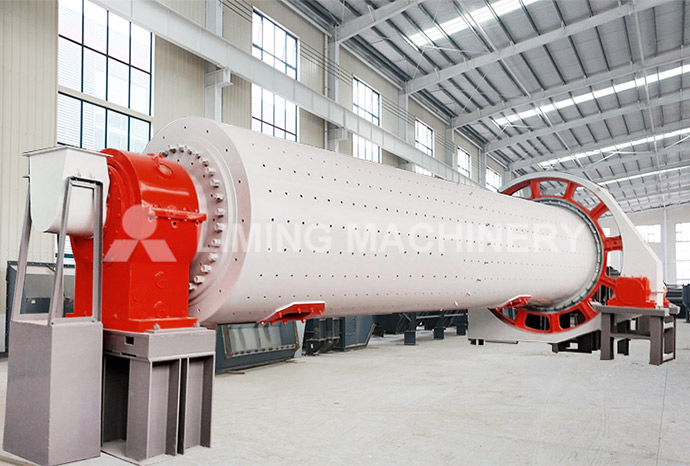
Energy efficiency: Compression-based grinding reduces power consumption by 30-50% compared to traditional ball mills
Space efficiency: The integrated design requires approximately 50% less floor space than ball mill systems
Precise particle size control: Adjustable classifier speed ensures consistent 200-mesh output (D90 pass rate)
Stage 2: Rotary Kiln Calcination
The limestone powder feeds directly into a vertical shaft lime kiln—selected for its suitability to Philippine operational conditions. Compared to traditional rotary kilns, the vertical kiln offers:
The kiln system operates with pulverized coal as fuel, prepared on-site using dedicated LM vertical coal mills.
Technical Specifications
Operational Results
Since commissioning, the Philippine production line has consistently delivered:
Grinding Performance:
Stable 200-mesh output with minimal deviation in particle size distribution
Successful processing of high-moisture limestone during monsoon periods
No auxiliary drying equipment required, eliminating an entire process step
Calcination Performance:
Product lime meets local industrial specifications (CaO >90%)
Heat consumption within design parameters
Kiln operation stability meeting 300,000 tpy annual targets
Operational Efficiency:
Reduced power consumption verified against traditional ball mill alternatives
Centralized PLC/DCS control with remote monitoring capability
Environmental Compliance:
Negative-pressure operation prevents dust leakage
Meets Philippine environmental standards for lime processing
Client Feedback
The client reported that the integrated LM mill and vertical kiln solution "significantly simplified the production flow" and provided "stable, reliable operation since commissioning." The elimination of separate drying equipment and the compact plant layout were particularly valued in the Philippine operational context.
Key Technical Advantages Validated in This Project
LM Vertical Mill's built-in drying capability is essential for tropical climates, eliminating external dryers and reducing system complexity
Material-bed grinding principle delivers 30-50% power savings over ball mills, directly reducing operational expenditure
Vertical shaft kiln technology provides superior lime quality (CaO>90%, activity>300mL) with lower heat consumption than traditional rotary designs
Integrated process flow (crushing → grinding → classification → calcination) minimizes material handling and conveyor requirements
Automated control system reduces labor costs and ensures consistent product quality across production shifts
FAQ
Q1: Can the LM Vertical Mill process limestone with high moisture content without an external dryer?
A: Yes. The LM mill is equipped with an air-swept drying system that can handle feed materials with up to 10-15% moisture by utilizing waste heat from the kiln exhaust. For the Philippine project, this eliminated the need for a separate rotary dryer.
Q2: What is the specific energy saving achieved with LM Series mills compared to ball mills?
A: Typical power savings range from 30% to 50% depending on feed material characteristics and target fineness. For limestone grinding to 200 mesh, the project verified savings of 8-12 kWh per ton of finished product.
Q3: How does the vertical shaft lime kiln compare to rotary kiln for Philippine conditions?
A: Vertical shaft kilns offer lower heat consumption (4,200-4,600 vs. >5,000 kJ/kg), higher product reactivity (>300mL), and significantly lower fugitive dust emissions. They also require less plant area and capital investment for medium-scale production.
Q4: What is the annual processing capacity range for LM Series vertical mills?
A: LM mills are available in multiple models covering capacities from 10 to 340 tons per hour. For 300,000 tpy limestone powder production, a mid-range LM model is appropriate. The specific model selection depends on feed characteristics and target fineness.
Q5: What after-sales support does Liming Heavy Industry provide for overseas projects like the Philippines?
A: Liming provides complete project services including equipment selection, plant layout design, civil engineering guidance, equipment installation supervision, commissioning, and operator training. All equipment is backed by standard warranty and technical support.
CASES
-
>
20t/h LM vertical coal mill site
-
>
Limestone sand powder preparation
-
>
2500TPD cement production line
-
>
1500t/d Cement Clinker Production Line
-
>
Electrolytic Aluminum Overhaul Slag Powder-Making Production Line
-
>
Ultrafine limestone powder production project
-
>
Vertical Mill, Process slag, 325mesh, 80-100tph
-
>
LM19-2N Vertical Mill, Process Slag,10-15tph
-
>
50-60t/h Vertical Roller Mill For Limestone
-
>
15TPH Coal Grinding Mill
Learn More

 WhatsApp
 Leave message