



Application of Rotary Kiln in the Mineral Processing Industry
The rotary kiln is an indispensable thermal equipment in mineral processing. Relying on its high-temperature calcination function, it enables mineral modification, purification, or phase transformation, and is widely used in the processing of both metallic and non-metallic ores.
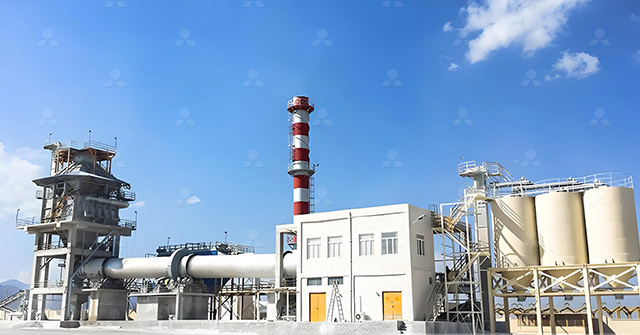
In the field of metallic ore processing, the core applications of rotary kilns are oxidation roasting and reduction roasting. For weakly magnetic iron ores such as hematite and limonite, magnetizing roasting in a rotary kiln (typically at 650–850°C) can convert them into strongly magnetic magnetite, significantly improving the separation efficiency of subsequent magnetic separation processes. For sulfide ores, such as chalcopyrite and galena, oxidation roasting removes harmful impurities like sulfur and arsenic, reducing their negative impact on downstream smelting processes while also modifying the mineral surface properties to enhance flotation reagent adsorption. In addition, certain refractory and complex ores can be processed via chloridizing roasting or sulfidation roasting in rotary kilns. For example, chloridizing roasting can convert target metals in tin middlings or gold ores into volatile chlorides or water-leachable compounds; sulfidation roasting is suitable for the extraction and transformation of vanadium, chromium, and other metals, enabling efficient enrichment of target elements.
In non-metallic mineral processing, rotary kilns are used for calcining kaolin to remove structural water and organic carbonaceous impurities, thereby improving whiteness and physicochemical properties to meet the requirements of industries such as ceramics and papermaking. For carbonate minerals like magnesite and dolomite, rotary kiln calcination decomposes them into oxides, providing raw materials for further processing. Taking light-burned magnesite as an example, calcination at 800–1000°C decomposes MgCO₃ into active MgO, with product activity (iodine adsorption value) reaching over 120 mg/g, far superior to traditional shaft kiln processes.
Rotary kilns used in mineral processing are typically lined with high-temperature refractory materials and equipped with precise temperature and rotational speed control systems. Material retention time is generally adjustable within the range of 30 to 120 minutes, and the filling rate is controlled at 8% to 15% to ensure adequate tumbling and heat transfer efficiency inside the kiln. In terms of equipment selection, single rotary kilns, double rotary kilns, or systems equipped with suspension preheaters can be chosen based on specific mineral characteristics to achieve a balanced optimization of thermal efficiency and production costs. The equipment offers advantages such as high throughput, strong adaptability, and stable roasting performance, and can be integrated with crushing, grinding, and separation equipment to form a complete mineral processing production line.
CASES
-
>
Industrial furnace supporting coal powder preparation
-
>
Coal mill , 200mesh D90 25tph
-
>
LM35-3N Slag Grinding Mill
-
>
Vertical Roller Mill For Limestone
-
>
LM vertical roller mill for limestone powder making
-
>
Silicate Cement Production Line
-
>
Blast Furnace Pulverized Coal Preparation Project
-
>
GBFS powder preparation project
-
>
Vertical Mill, Process slag, 325mesh, 80-100tph
-
>
Pulverized Coal Preparation Project
Learn More

 WhatsApp
 Leave message