



Energy Efficiency Through Vertical Roller Mill Technology in cement plant
Energy Efficiency Through Vertical Roller Mill Technology
In cement manufacturing, gypsum serves as a critical set regulator, typically added at 4–6% during clinker grinding. While its proportion in the final product is relatively small, the grinding energy consumed by gypsum processing can account for a notable share of the overall grinding circuit power. According to research published in Cement and Concrete Research, differences in gypsum source and mineralogical characteristics alone can result in grinding power consumption variations of up to 15% under identical operating conditions. This finding underscores the importance of selecting appropriate grinding equipment and optimizing the processing circuit.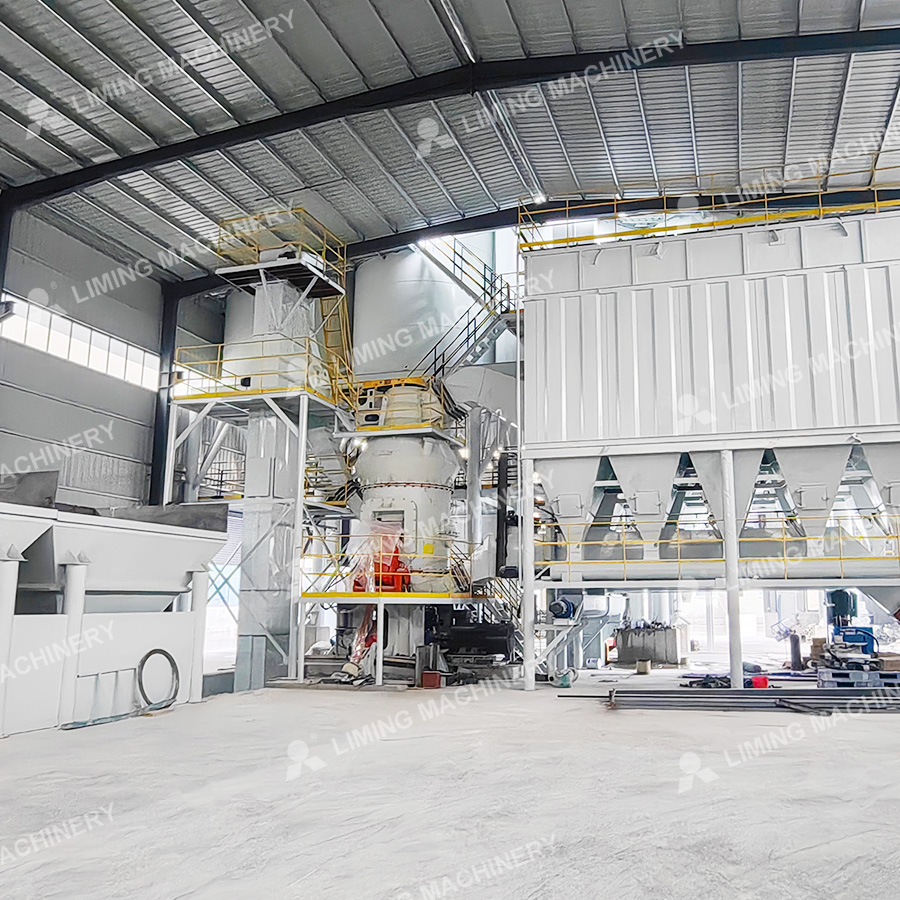
The Energy Case for Vertical Roller Mills
Traditional ball mills have long been the workhorse of cement grinding circuits, but their energy inefficiency in gypsum processing is well documented. Liming Machinery’s LM series vertical roller mills offer a fundamentally different grinding mechanism. Rather than relying on impact and attrition from tumbling steel balls, vertical mills employ a material-bed grinding principle: rollers apply pressure onto a rotating grinding table, crushing the material layer between them. This approach eliminates direct metal-to-metal contact, reducing both wear and noise.
According to Liming Machinery’s technical documentation, the LM vertical mill system achieves over 30% electricity savings per ton of material compared to traditional tube mills in raw material grinding applications. For gypsum processing specifically, this translates into substantial operational cost reductions over the equipment’s service life.
Technical Parameters for Gypsum Grinding Applications
| Specification | LM1300K | LM1500K | LM1700K | LM1900K |
|---|---|---|---|---|
| Capacity (t/h) | 10–40 | 13–50 | 18–70 | 23–85 |
| Product Fineness (mesh) | 80–425 | 80–425 | 80–425 | 80–425 |
| Max Feed Size (mm) | ≤38 | ≤40 | ≤42 | ≤45 |
| Input Moisture | <15% | <15% | <15% | <15% |
| Main Motor Power (kW) | 200 | 280 | 400 | 500 |
Source: Liming Machinery LM series vertical roller mill specifications
Drying Integration and Moisture Management
A significant operational advantage of the vertical mill for gypsum processing is its integrated drying capability. Cement plants frequently receive gypsum with varying moisture content—natural gypsum may arrive with surface moisture from storage, while desulfurized gypsum from flue gas treatment often contains 10–15% free water. The LM mill’s hot-air system allows direct processing of such materials without separate drying equipment. Air enters at temperatures up to 350°C and exits at 70–95°C, effectively reducing product moisture to below 1%. This integration simplifies the process flow, reduces capital expenditure, and enables the use of waste heat from the kiln system.
For cement producers seeking to reduce grinding circuit energy consumption, switching gypsum processing from ball mills to vertical roller mills represents a proven optimization pathway. The combination of lower specific power consumption, integrated drying, and reduced wear part consumption delivers measurable operational benefits. For specific capacity requirements and configuration guidance, consult Liming Machinery’s technical resources at https://www.liming-machinery.com.
CASES
-
>
3200t/d silicate cement production line
-
>
1500t/d Cement Clinker Production Line
-
>
GBFS powder preparation project
-
>
2500TPD cement production line
-
>
50-60t/h Vertical Roller Mill For Limestone
-
>
15TPH Coal Grinding Mill
-
>
Blast Furnace Pulverized Coal Preparation Project
-
>
20t/h LM vertical coal mill site
-
>
Vertical Mill, Process slag, 325mesh, 80-100tph
-
>
Pulverized Coal Preparation Project
Learn More

 WhatsApp
 Leave message